If you wake up feeling like your knees and hips belong to someone twenty years older, you are in good company. Many of us swing our legs over the edge of the mattress, plant our feet on the rug, and pause for a few seconds because our joints feel like rusty hinges on an old screen door. That initial stiffness can make the walk to the kitchen or the bathroom feel much longer than it really is.
We believe morning movement should never feel like a chore or a test of endurance. You do not need special equipment, athletic clothes, or a complicated routine to get your body moving comfortably. With just a few slow, purposeful movements done before your feet even carry your full weight, you can warm up the natural fluids in your joints and start your morning on steady, confident footing.
Why Joints Feel Tightest Right After Waking Up
Our joints rely on a clear, slippery substance called synovial fluid to glide without friction. When you move throughout the day, this fluid warms up and thins out, coating the cartilage inside your knees and hip sockets. While you sleep, your body rests in one or two positions for hours at a time. The synovial fluid cools and thickens, much like olive oil placed in a cool pantry. When you first wake, your joints are simply working through that thicker fluid until movement warms it up again.
Circulation also slows down while we sleep. Your heart rate drops, your blood pressure lowers, and less blood pumps out to the extremities and outer joint capsules. Tendons and ligaments around the pelvis and kneecaps lose a bit of their daytime elasticity in this resting state. When you sit up quickly, those cooler tissues pull tight against the bone, producing that familiar dull ache or stubborn tightness.
The temperature of your bedroom plays a role as well. A room that dips below 65 degrees during the night can cause muscles to contract reflexively to keep you warm, shortening the hamstrings and the iliopsoas muscles in the front of your hips. If you live with joint mobility, the natural thinning of the cartilage means the joint surfaces are more sensitive to these temperature drops and fluid changes.
While morning stiffness lasting ten to twenty minutes is very common, pain that remains intense after an hour of moving around is something to discuss with your doctor or physical therapist. We always recommend getting persistent, sharp, or hot-feeling joint pain checked out by a medical professional, as it may point to inflammatory conditions that need specific medical care.
Bedside Ankle Circles to Wake Up Circulation
Before you stand up or bend your knees deeply, it helps to start right at the bottom of the kinetic chain: your ankles. Your calves act as secondary pumps for your cardiovascular system, pushing stagnant venous blood back up toward your heart and knees. Warming the ankles sends fresh blood directly into the lower legs, preparing the knees for weight.
You can do this exercise either sitting upright on the edge of the mattress or propped up against your pillows with your legs extended in front of you. Choose whichever feels more comfortable for your lower back.
Positioning your legs: If sitting on the edge of the bed, let your feet hang loosely without touching the floor. If lying back, keep one leg bent with your foot resting on the sheet, and lift the other leg a few inches off the mattress.
Tracing the circle: Slowly point your big toe forward, then sweep it to the outside, pull it back toward your shin, and sweep it across toward the inside. Imagine you are drawing the face of a clock with your big toe. Move through all twelve numbers smoothly. Complete 8 slow circles in a clockwise direction, then switch to 8 circles counter-clockwise.
Pointing and flexing: Finish the movement by pointing your toes down toward the floor as far as comfortable, pausing for 2 seconds, and then pulling your toes up toward your knees for 2 seconds. Repeat this 6 times on each foot.
| Movement Type | Pacing | Primary Benefit |
|---|---|---|
| Rapid Foot Pumping | Fast, uncontrolled | Raises heart rate, but does little to mobilize the joint capsule |
| Slow Ankle Circles | 3 to 4 seconds per circle | Encourages synovial fluid flow and engages calf muscles evenly |
| Toe Flex and Point | 2-second pause at each end | Stretches the Achilles tendon and activates the shin muscles |
Seated Knee Lifts to Loosen the Thighs
Once your ankles feel warm, shift into a secure seated position on the firm edge of your mattress. Your thigh bones meet your pelvis at the hip, and the large quadriceps muscles in the front of your thighs cross over your kneecaps. When these muscles are tight from sleeping curled on your side, your knees will feel stiff and resistant to bending.
This exercise gently wakes up the hip flexors and encourages the knee joint to open and close without having to carry your body weight. Sit upright with your shoulders stacked over your hips, resting your hands flat on the mattress beside your thighs for support.
Planting your foundation: Keep your left foot flat on the floor, directly under your left knee. This gives you balance and prevents your pelvis from rocking backward.
Lifting with control: Engaging your lower abdominal muscles, lift your right knee toward the ceiling by about 3 to 5 inches. You do not need to bring your knee to your chest; a small, controlled lift is plenty. Hold the foot off the floor for 2 seconds, keeping your toes relaxed.
Lowering softly: Lower your right foot back to the floor without letting it slam down. As soon as your sole touches the rug, pause for a breath, and then repeat the lift. Complete 6 to 8 repetitions on your right leg, then switch to your left leg.
If you notice your lower back rounding when you lift your leg, reduce the height of the lift. The goal is to isolate the front of the hip and thigh, not to test how high your leg can travel.
Gentle Hip Openers While Still in Bed
The hips are ball-and-socket joints surrounded by deep rotators and strong ligaments. When these rotators tighten up overnight, they tug on the pelvis, which in turn places uneven strain on your lower back and the inner edges of your knees. Working on the hips while still supported by the mattress eliminates the risk of losing your balance.
Lie flat on your back with a pillow under your head to keep your neck comfortable. Bend both knees so that your feet are resting flat on the mattress, roughly shoulder-width apart. Let your arms rest out to the sides with your palms facing up.
The Gentle Bedside Knee Drop
Keep your shoulders glued to the mattress. Take a slow breath in, and as you breathe out, let both knees drift gently toward the right side of the bed. They do not need to touch the mattress; let gravity take them only as far as feels like a pleasant, mild stretch across the left hip and outer thigh. Hold this position for 5 seconds. Inhale as you bring your knees back to the center, then exhale and let them drift down toward the left side. Repeat this side-to-side sequence 4 times.
The Single-Knee Hug
From the same starting position, lift your right foot off the bed and bring your right knee toward your torso. Clasp your hands behind your thigh, just below the knee crease, rather than grabbing the front of your shin. Grabbing behind the thigh keeps unnecessary pressure off your kneecap. Gently draw your thigh toward your belly until you feel a firm, comfortable release in your hip and lower back. Hold still for 10 to 15 seconds while breathing slowly into your ribs. Lower the foot back to the bed and repeat with the left leg. Perform 2 holds on each side.
- Keep your neck and jaw loose while holding your leg; do not strain your shoulders to pull the knee closer.
- If your hands do not comfortably reach the back of your thigh, loop a small bath towel or bathrobe belt behind your leg and hold the ends.
- Stop immediately if you feel a sharp pinching sensation deep inside the front of your hip crease.
How to Stand Up Steadily and Without Rushing
Standing up from a low or soft mattress can be the most challenging part of the morning for stiff joints. When you stand too quickly, your blood pressure can drop slightly, creating a moment of lightheadedness, and your knees can buckle if the surrounding muscles have not fully engaged. Moving from lying down to standing should always be a deliberate, two-part process.
Begin by rolling entirely onto your side. Use your top hand to press into the mattress while swinging your legs over the edge of the bed. This sideways rise protects your lower back from strain. Sit on the edge of the bed for at least 30 seconds before attempting to rise. Use this time to let your inner ear equalize and to check in with your balance.
Setting your stance: Slide forward until your buttocks are near the front edge of the mattress. Place your feet flat on the floor, about hip-width apart. Pull your heels back slightly so they sit just behind your knees. This foot position gives your leg muscles the mechanical advantage they need.
Nose over toes: Lean your upper body forward from your hips, keeping your spine straight. Bring your chest forward until your nose is positioned directly over your toes. This shifts your center of gravity forward over your feet before your hips ever leave the bed.
Pushing to tall posture: Place your palms on the mattress beside your hips, or on your thighs just above the knees. Push down through your feet and your hands simultaneously. Straighten your legs smoothly, exhale, and come to a tall, upright stance.
Once you are upright, stand still for 10 seconds. Do not rush to take that first step. Feel your feet firmly planted on the floor, soften your knees slightly so they are not locked backward, and let your body settle into its full height.
Common Mistakes to Avoid
When our joints feel tight, human nature often pushes us to fix the problem too fast. We see people making a few simple errors that can turn a helpful morning routine into an uncomfortable start to the day. Keeping these pitfalls in mind will protect your joints from unnecessary irritation.
- Bouncing during stretches: Quick, pulsing stretches trigger a defense mechanism in your muscles called the stretch reflex, which actually causes the muscle to shorten and tighten rather than lengthen. Keep every movement smooth, slow, and steady.
- Holding your breath: When an area feels stiff, it is common to hold your breath as you move. This raises your internal blood pressure and creates tension in your neck and spine. Breathe out during the effort of the stretch, and breathe in as you release.
- Pushing through sharp pain: A dull pull or a sense of stiffness is normal in the morning, but sharp, stabbing, or hot pain is your body's stop sign. If an exercise produces a pinch in the joint, stop that movement right away.
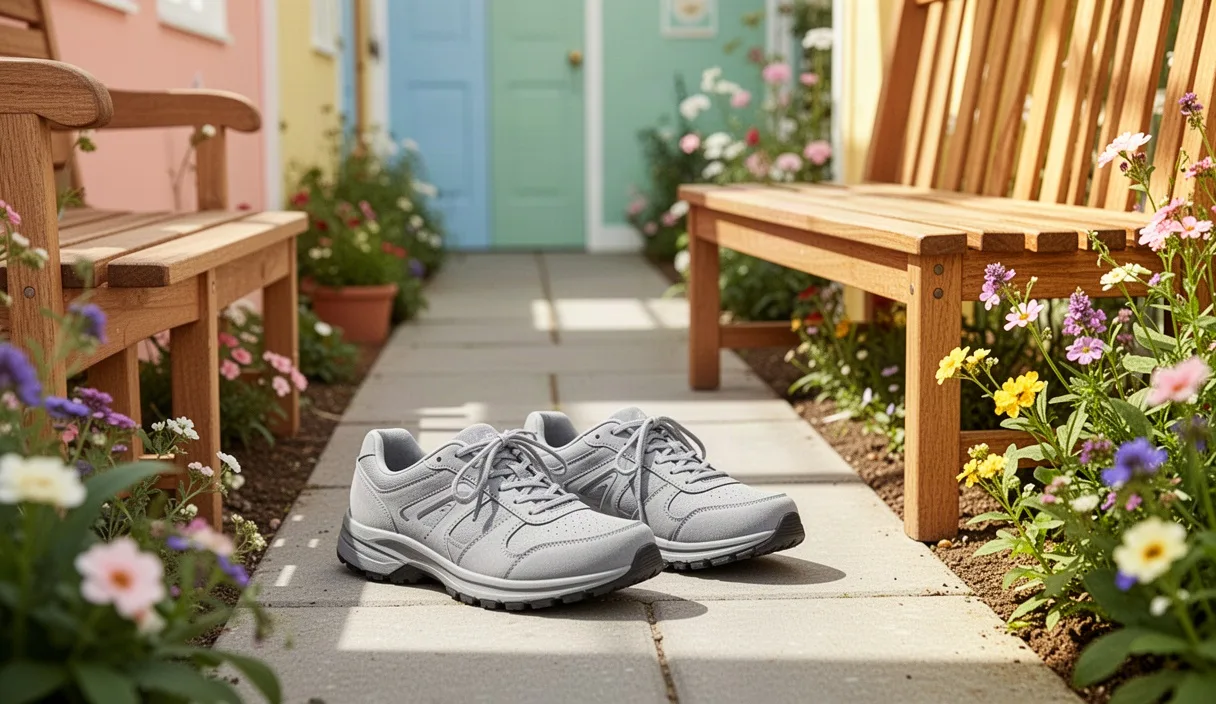
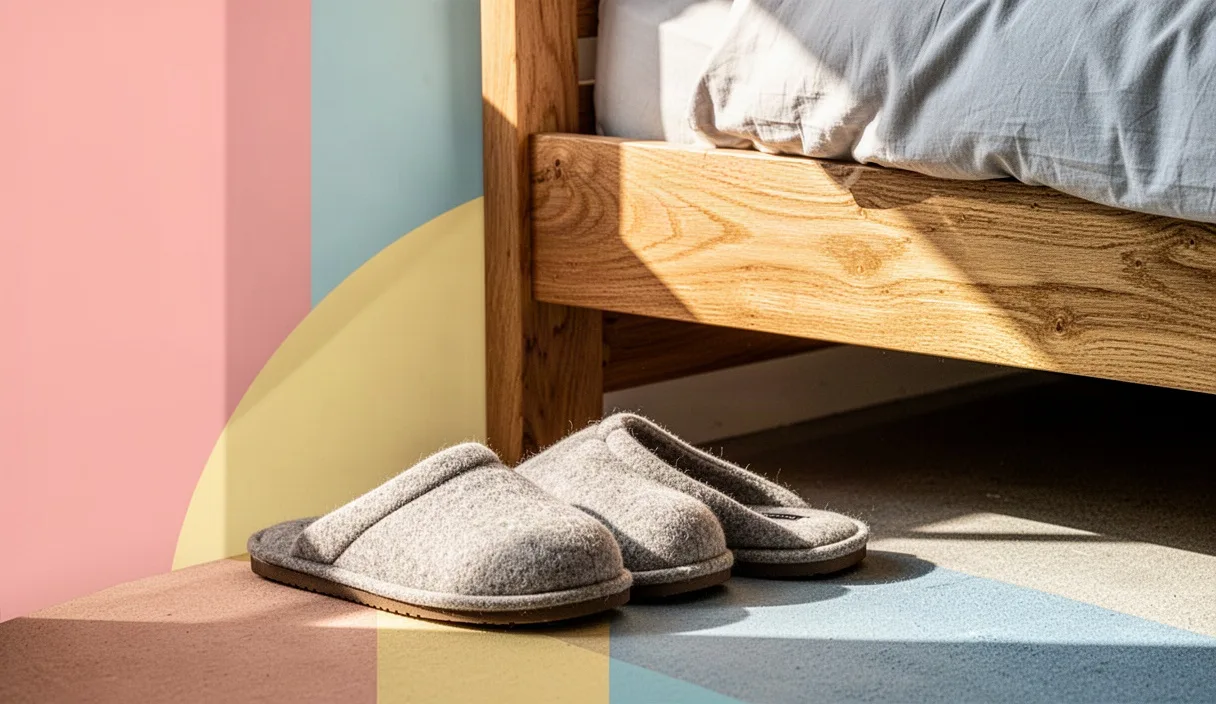
- Neglecting footwear: Walking across cold, hard hardwood or tile floors barefoot right out of bed puts extra impact shock on stiff knees and ankles. Keep a supportive pair of indoor shoes or firm-soled slippers with good traction right next to your bed.
Practical Next Steps for Your Morning Routine
Developing a comfortable morning habit does not require a large block of time. The entire sequence outlined here takes about 7 or 8 minutes from the moment you wake up. Tomorrow morning, try setting your alarm just 10 minutes earlier than usual so you do not feel hurried by the clock.
Start simply by choosing two of these movements for your first few days. Many of our readers find that starting with the ankle circles and the seated knee lifts gives them immediate relief without overwhelming their morning schedule. After three or four days, once those movements feel natural, you can add the hip openers while lying down.
Track how your legs feel as you walk into the kitchen over the next two weeks. You will likely notice that the initial awkwardness in your stride softens sooner, and your knees feel more willing to bend. Remember, consistency matters far more than intensity. If your stiffness worsens over time, or if you ever feel unsteady on your feet when rising, reach out to your primary care doctor or a licensed physical therapist. They can review your home setup, evaluate your specific joint health, and tailor these movements to match your exact needs.