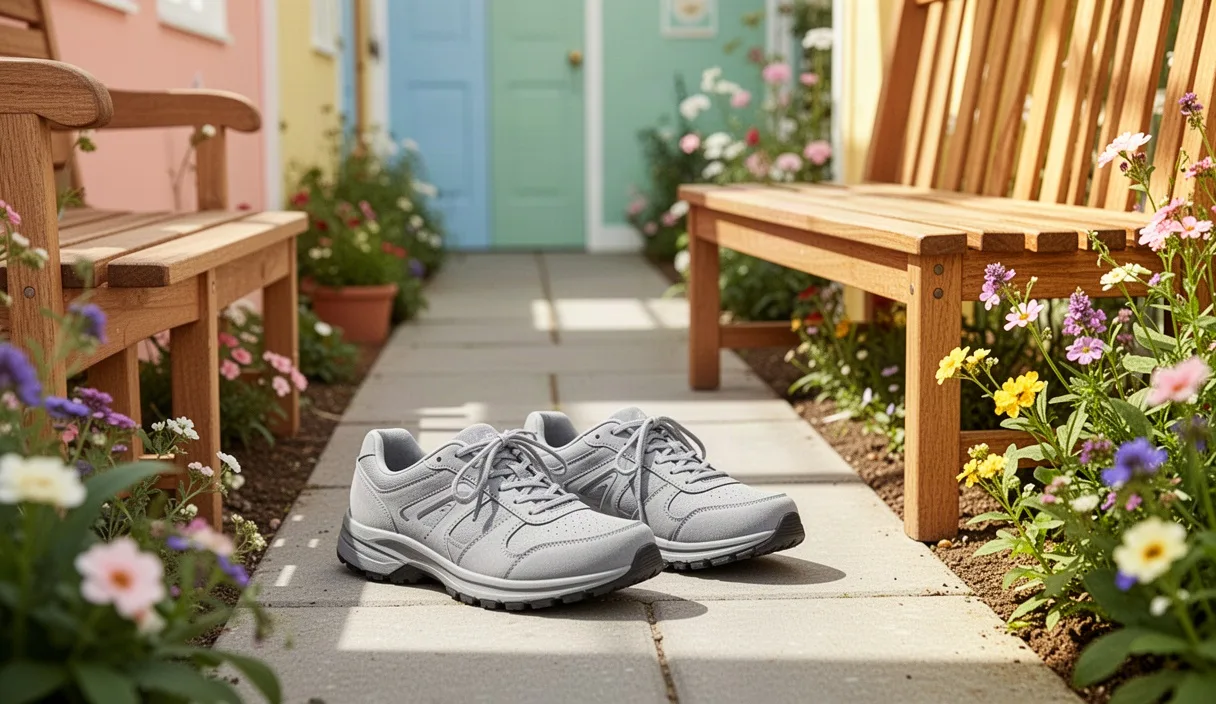
If you have noticed that your daily walk around the block feels a bit harder on your ankles, knees, or the balls of your feet than it used to, you are in good company. Many of us find that shoes we wore comfortably for years suddenly feel thin, stiff, or narrow. Our bodies change as the calendar turns, and the feet carry every single mile of that journey. Finding a shoe that keeps you upright, balanced, and comfortable is not about chasing athletic trends. It is about protecting your joints so you can keep running your errands, tending the garden, and taking your morning stroll without dreading the walk back home.
Arch support is often talked about as if it were a cure-all, but real support involves the whole build of the shoe, from the heel cup to the rubber tread. In our shop, we look at footwear as equipment for independent living. A good walking shoe does not need to look like a medical device, but it does need to match the actual shape of your foot today, not the shape it had twenty years ago. Let us walk through what happens to your feet over time and how you can test a pair of shoes with your own hands before you spend a single dollar.
How Foot Shape and Cushioning Change Over Time
Our feet undergo quiet, steady structural shifts as we age. Beneath your heel and the balls of your feet sits a natural layer of specialized fat, called the plantar fat pad. This tissue acts like a built-in shock absorber. Over decades of walking, standing, and carrying weight, this fat pad gradually thins out and loses its elasticity. At the same time, the tendons and ligaments that hold your twenty-six foot bones together begin to stretch. As these connective tissues relax, the arch naturally drops closer to the floor, causing the foot to lengthen and widen.
This means your shoe size is rarely static in your sixties, seventies, or beyond. It is entirely common to find that you have gone up half a shoe size, or moved from a standard medium width to an extra-wide, even if your overall body weight has stayed the same. When the arch flattens without proper structural support underneath it, the plantar fascia band along the sole is pulled taut, which often leads to morning heel pain or aching shins after a trip to the grocery store.
| Foot Characteristic | Earlier Adult Years | Later Decades | What the Shoe Must Provide |
|---|---|---|---|
| Fat Pad Thickness | Plump, bouncy adipose layer | Thinned, dispersed tissue | Resilient polyurethane or dense EVA foam cushioning |
| Arch Flexibility | Taut, springs back readily | Lax ligaments, lower resting arch | Contoured shank or firm medial post to prevent collapse |
| Forefoot Width | Contained metatarsal spread | Splayed metatarsals, bunion growth | Wide, rounded toe box without rigid side seams |
| Skin & Circulation | Thick, fast-support skin | Thinner skin, slower support | Padded collar, smooth inner lining, breathable mesh |
Because these shifts happen slowly, many people keep buying the same size and brand for thirty years out of habit. That habit can lead to unnecessary discomfort. If you notice unusual tenderness, skin redness, or burning along the bottom of your feet, checking in with a podiatrist is always wise. They can diagnose conditions like tendonitis, joint mobility, or plantar fasciitis, and help you determine whether an off-the-shelf supportive shoe or a custom insert is the right path for your specific gait.
The Pinch Test for Heel and Midsole Stability
Before you ever slip your foot into a new walking shoe, you can learn almost everything you need to know about its stability by running three simple manual tests on the display rack. A soft, squishy shoe often feels wonderful for the first five minutes on carpet because it resembles a house slipper. However, a shoe that is too soft acts like a foam mattress under your foot: your ankle muscles must work twice as hard to keep you balanced, which wears out your legs and increases the risk of a stumble.
Start with the heel pinch. Cup the back of the shoe where your heel sits, known as the heel counter, and try to squeeze the sides together with your thumb and index finger. A supportive shoe will have a firm internal plastic or composite cup that resists your grip. If the heel counter folds flat easily under light pressure, it will not hold your heel bone upright when you make contact with the pavement. A firm heel counter keeps your heel from wobbling from side to side with every step.
Next, perform the midpoint twist and bend check. Hold the heel firmly in one hand and the front of the shoe in your other hand, then gently try to twist the shoe like a wet dishcloth. A safe walking shoe should feel rigid through the middle; it should not wring out easily. Finally, press the toe of the shoe upward toward the laces. The shoe should bend cleanly across the ball of the foot, right where your own toes naturally bend. If the shoe folds directly in half under the arch, put it back on the shelf. A shoe that folds in the middle offers zero arch support, regardless of what the tag claims.
- Check the Heel Counter: Press firmly on the back cup. It should feel stiff like a riding boot, not soft like a sock.
- Test the Torsional Rigidity: Twist the sole gently in opposite directions. The midfoot should hold its shape without twisting into a spiral.
- Locate the Flex Point: Push the toe tip up toward the tongue. The bend must happen strictly at the widest part of the forefoot, never beneath the arch.
Room for Toes: Avoiding Calluses and Pinched Nerves
A supportive arch does very little good if your toes are packed tightly together like sardines. When shoes are too narrow or taper sharply toward the center, your toes rub against the interior walls and against each other. Over time, that constant friction produces painful corns, thick calluses, and aggravated bunions. Even worse, squeezing the long bones of the foot together can irritate the delicate sensory nerves running between the toes, creating a sharp, tingling numbness known as a Morton's neuroma.
When you stand upright, your body weight presses downward and pushes your toes forward and outward. That is why you should always fit your shoes while standing, not while sitting on a low store stool. We recommend at least a thumb-width of clear space, roughly half an inch, between your longest toe and the very end of the shoe. Keep in mind that for many people, the second toe is longer than the big toe, so measure from whichever point reaches furthest forward.
The height of the toe box matters just as much as its width. As we get older, small changes in joint alignment can cause hammertoes, where the middle joint of a toe curls upward. If the fabric above your toes is shallow, stiff, or lined with heavy decorative seams, it will rub the skin over those raised joints raw. Look for shoes with a deep, rounded toe box made of pliable mesh or soft leather. Your toes should be able to wiggle freely and lie flat without pressing against the ceiling or sides of the interior lining.
Closures That Are Friendly to Stiff Finger Joints
Support is only helpful if you can get the shoe onto your foot securely every morning. For folks dealing with morning stiffness, joint mobility, or reduced grip strength in their hands, wrestling with traditional, thin nylon laces can turn dressing into an exhausting chore. Yet slipping into completely unfastened loafers or backless mules is not a safe answer for regular walking, because your toes have to claw inward to keep the shoe attached to your heel, which strains the sole of the foot.
Fortunately, shoemakers now offer several practical closure styles that hold your foot snug without demanding sharp finger dexterity. The goal is to keep the shoe married to your foot so your heel does not lift out when you take a stride, while keeping the fastening process painless and straightforward.
- Wide Hook-and-Loop Straps: Two or three broad Velcro-style straps give you plenty of leverage. You can pull them snug with the palm of your hand, and they allow for quick loosenings if your feet tend to swell as the day goes on.
- Elastic Bungee Laces with Slide Locks: These replace standard laces entirely. You pull a small plastic toggle to tighten the tension across the bridge of your foot, avoiding knot-tying altogether.
- Dual-Entry Side Zippers: These shoes feature standard laces that you or a family member adjust once for the perfect fit. After that initial setup, you simply use the side zipper running along the ankle collar to slide your foot in and out.
- Step-In Heel Cages: Newer adaptive shoe designs include a flexible rear heel collar that snaps down when your foot pushes inside, then springs back into an upright, locking position on its own.
Questions to Ask When Trying Shoes at the Store
Walking into a large footwear shop can feel overwhelming with all the colorful displays and athletic jargon. You do not need to memorize shoe terminology, but having a few direct questions ready for the sales clerk will save you time and help you cut through the marketing talk. Remember that independent, comfort-oriented shoe stores often employ staff trained in pedorthics who understand foot mechanics better than general retail clerks.
Start by asking: "Can the factory insole in this shoe be removed completely?" This is critical. Even if you do not wear custom orthotics today, you might need a supportive over-the-counter insole tomorrow. A shoe with a glued-down footbed will not accommodate an aftermarket support piece without crowding your instep and pinching the top of your foot.
Next, ask the fitter: "Does this model come in wider widths like 2E or 4E, and do you have a Brannock device to measure both of my feet right now?" Many big-box stores only stock standard D-widths for men or B-widths for women. A clerk who is eager for an easy sale might suggest you just buy a half size larger to get more room. That is poor advice. Sizing up in length to gain width places the shoe's built-in arch support in the wrong spot relative to your heel, which can throw your stride off balance. Buy the correct length in a genuine wide width instead.
Finally, ask them: "What is the heel-to-toe drop on this sole?" Heel-to-toe drop refers to the difference in height between your heel and your toes. Traditional walking shoes usually have a drop of 8 to 12 millimeters, which takes strain off the Achilles tendon and calf muscles. Very flat shoes, often called zero-drop shoes, force your calf muscles to stretch deeply with every step. Unless you have spent years walking in zero-drop footwear, switching to completely flat shoes abruptly can irritate tight calf muscles and trigger heel pain.
Common Mistakes to Avoid
Even well-intentioned shoppers run into trouble by overlooking small details that make a huge difference in comfort. Here are the three missteps we see most often in our community:
- Shopping first thing in the morning: Feet are at their smallest right after you wake up. As you stand and walk during the day, gravity pulls fluid downward, causing mild, normal swelling. If you buy a shoe at nine in the morning, it may pinch your feet painfully by four in the afternoon. Do your shoe shopping after lunch or in the early evening.
- Wearing the wrong socks during the fitting: Never try on walking shoes with thin dress socks or barefoot stocking slips if you plan to wear cushioned cotton or wool walking socks at home. Bring the exact pair of socks you wear on your morning walks directly to the shoe store.
- Keeping shoes until they look worn out: A shoe's internal arch support and midsole foam wear out long before the rubber tread wears through. If you walk roughly thirty minutes a day, the supportive midsole foam typically packs down and loses its spring between 350 and 500 miles, or roughly every eight to twelve months. If the heel looks tilted when you set the shoe on a flat table, it is time for a replacement.
Practical Next Steps for Your Next Walk
Taking care of your feet does not require an overhaul of your whole routine. You can start this afternoon with what you already own. Pull your favorite pair of walking shoes out of the closet and place them on a flat, hard kitchen counter or table. Crouch down to eye level and look at them from behind. Are they tilting toward the inside, or leaning heavily outward? Now pick them up and try the heel pinch and the midfoot twist tests we discussed earlier. If they bend easily like a pair of foam slippers, your feet are doing all the stabilizing work that your shoes ought to be handling.
If you find that your current shoes are lacking, plan a trip to a local footwear store later this week, ideally in the afternoon. Wear your normal walking socks, and ask the fitter to measure both feet while you stand upright, because it is entirely normal for your dominant foot to be slightly larger than your other one. Always fit the shoe to your larger foot; a small tongue pad or lacing adjustment can easily snug up the smaller side. If you have sharp heel pain, numb toes, or balance difficulties that make you feel unsteady on your feet, schedule a visit with your primary doctor or a podiatrist before committing to your next pair. With the right foundation beneath you, walking remains one of the simplest, most rewarding joys of daily life.