If you walk into our kitchen on any given morning, you will likely see a couple of amber pill bottles sitting near the electric kettle. Managing several prescriptions, a daily vitamin, and an occasional pain reliever sounds simple enough until life gets busy. A phone call rings while you have a bottle open, or a grandson asks for a glass of apple juice, and suddenly you cannot remember whether you swallowed your blood pressure tablet or left it on the counter.
We see this happen all the time, and there is no reason to feel embarrassed about it. When you manage four, six, or even ten different pills each day, relying on pure memory is an unfair burden to place on yourself. With a few low-tech tools, a steady routine, and clear notes, you can take your daily medicines safely and get back to enjoying your day without that nagging feeling of doubt.
Common Traps When Taking Multiple Daily Tablets
The biggest hurdle most of us face is that modern medicine bottles look nearly identical. Standard amber vials come in two or three standard sizes, with white safety caps and tiny black print that strains older eyes. When you have two different bottles from the same pharmacy chain, it takes only a moment of distraction to mix up a morning water pill with an evening cholesterol tablet.
Another frequent trap is the shifting schedule. Some pills require food in your stomach, others demand an empty stomach with a full glass of water, and some cannot be taken within two hours of dairy products or calcium supplements. When doctors add a new prescription during a routine visit, they often explain these details quickly. By the time you unpack the bag at home, the instructions can feel like a riddle.
We also notice trouble when people mix daily maintenance drugs with as-needed items. If you take a daily heart tablet, an allergy capsule during ragweed season, and a mild pain reliever for an achy knee, keeping them in the same drawer makes grabbing the wrong bottle far too easy. Here are four common problem areas to watch for in your own medicine cabinet:
- Lookalike and soundalike names: Many generic medicines have names that sound almost identical, such as hydralazine for blood pressure and hydroxyzine for itching or anxiety.
- Variable refill schedules: When your prescriptions run out on different days of the month, you find yourself making three or four trips to the counter, which interrupts your weekly flow.
- Different doctors writing prescriptions: Your cardiologist, your primary care doctor, and your eye specialist might not always see each other's notes right away, leading to duplicate therapies.
- Moving bottles around the house: Leaving one bottle by the bedside, two near the kitchen sink, and one in your travel bag makes tracking daily doses nearly impossible.
Choosing Between Daily, Weekly, and Twice-Daily Boxes
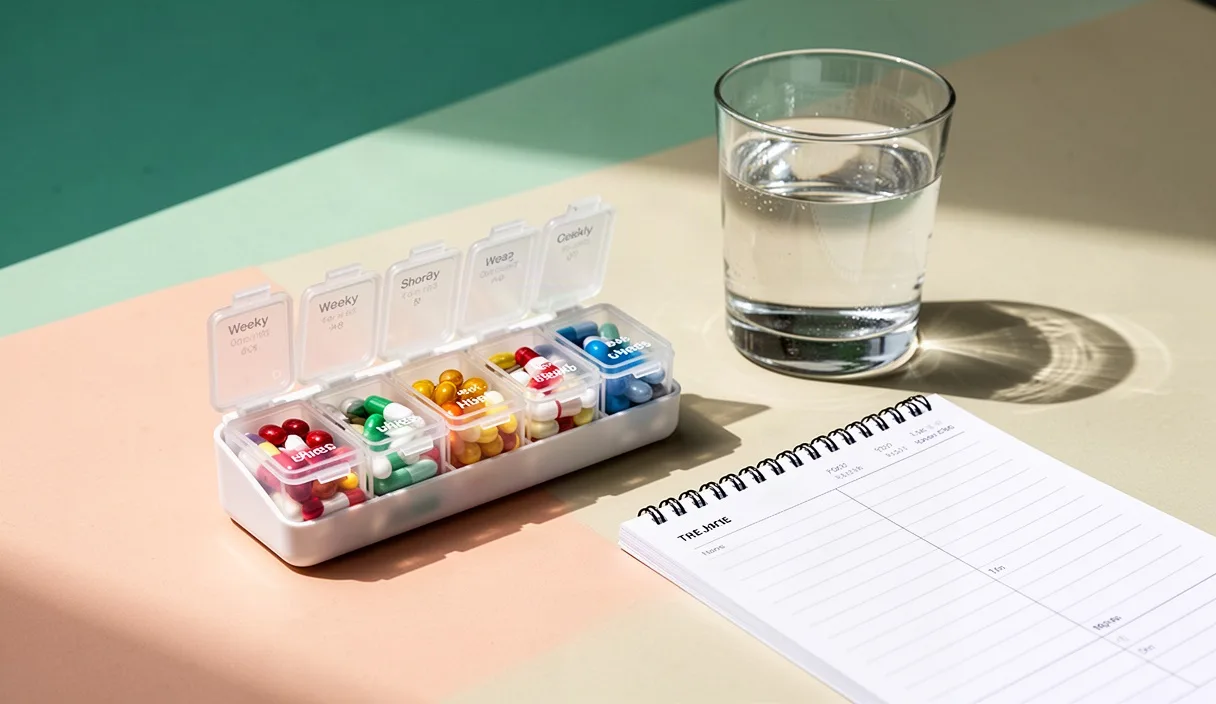
Getting your tablets out of their individual bottles and into an organizer is the single most reliable way to prevent missed or doubled doses. However, walking down the pharmacy aisle presents you with dozens of plastic trays, and picking the right one depends entirely on your daily rhythm.
If you take tablets only once per day, usually with breakfast, a simple seven-day organizer with large letters works best. If you take medicines morning and evening, a two-row box with distinct sun and moon icons keeps the times separated. For folks who need pills four times a day, four-chamber trays or carousel organizers give each dose its own home.
| Box Type | Best Suited For | Key Advantage | Watch Out For |
|---|---|---|---|
| Single-row 7-day box | People taking pills only once each day | Compact, fits easily on a kitchen shelf | Cannot separate morning from evening doses |
| Two-row AM and PM box | Doses split between morning and bedtime | Clear visual split between daylight and night | Lids can pop open if tossed into a handbag |
| Four-compartment daily towers | Complex schedules: morning, noon, evening, bed | You can take just one day's tower on a day trip | More small lids to snap shut during refill time |
| Push-button locking boxes | Hands with joint mobility or reduced grip strength | Gentle touch opens compartments easily | Slightly bulkier footprint on the counter |
When selecting a box, test the hinges before you leave the store. We always look for lids that open wide enough for fingers to reach down to the bottom without pinching. Clear plastic is preferable to solid colors because you can glance across the kitchen table and verify whether today's compartment is empty without having to pry it open.
Establishing a Dedicated Refill Routine Once a Week
A good pill organizer only works if it gets filled consistently. The best way to manage this is to treat the refill like a small, quiet appointment with yourself once every seven days. Many people prefer Sunday morning after the dishes are cleared or quiet Sunday afternoons before supper.
Clear off a clean, flat table with plenty of light. Avoid doing this near an open sink where a dropped tablet might roll down the drain. Turn off the television and ask family members to give you ten minutes of quiet so you do not lose your place mid-count. Keep your master list of prescriptions right next to the tray.
- Wash and dry your hands completely: Moisture on your fingers can cause coated tablets or gelatin capsules to soften and stick to the plastic organizers.
- Line up the original bottles in order: Arrange them from left to right to match the order written on your medication card.
- Fill one medicine at a time across the week: Open the first bottle, count out the seven tablets needed, place one in each daily slot, close that bottle, and move it to the far side of the table.
- Perform a final compartment check: Look down into each compartment from above. Every Monday through Sunday slot should look identical in color, size, and tablet count.
- Check your remaining supply: If any bottle has fewer than seven doses left, write the prescription name and number directly on your grocery pad so you can request a refill three or four days ahead of time.
If you notice that a tablet looks different from your previous refill, perhaps a white round tablet is now an oval yellow pill, do not guess. Call your pharmacist before you put it in the box. Pharmacies switch manufacturers often, and while the medicine is usually the exact same active compound, a quick two-minute call gives you complete peace of mind.
Tying Medication Moments to Existing Daily Habits
The human brain struggles with arbitrary alarm clocks, but it excels at connecting actions together. In our experience, setting an alarm on a phone often leads to simply turning the alarm off and intending to get water in a minute, only to forget completely. Instead, anchor your pill-taking to habits you already do without thinking.
For morning medicines, pair your organizer with your first cup of coffee or the bowl where you mix your oatmeal. If you always brew tea at 7:30 in the morning, place your box right beside the mug rack. The kettle whistling becomes the physical trigger to take your morning dose with a tall glass of cool water.
For evening doses, tie the action to something pleasant and regular, like brushing your teeth, turning on the bedside reading lamp, or feeding the cat. Just be cautious about bathroom storage. While keeping medicine beside your toothbrush sounds natural, bathroom humidity from hot showers can break down tablets and weaken their potency over time. A nightstand drawer or a dry hallway counter is a much better home.
If you take medicines that must be spaced three or four hours apart, create a mid-day anchor. For example, connect your afternoon tablet to eating lunch or putting on your walking shoes for an afternoon stroll around the garden. When the medicine is tied to a regular life event, taking it becomes as second-nature as locking the front door before leaving.
How to Keep an Accurate Medication Card for Emergencies
Every household should have a physical medication card written on real paper. While many people store notes on a smartphone, emergency medical technicians, nurses, and hospital staff look for paper in your wallet or on the front of your refrigerator. In a stressful moment, a clear piece of paper answers questions when you might be tired or flustered.
Your card should not merely say "heart pill." It must state the exact brand and generic name, the strength in milligrams, how often you take it, and the original reason for the prescription. We also strongly recommend adding the prescribing doctor's office phone number and your primary dispensing pharmacy.
What to Put on Your Medication Record
- Full name and date of birth: Place these clearly at the top of the card.
- Drug name and exact strength: Write "Lisinopril 10 mg" rather than simply "blood pressure medicine."
- Exact schedule and special notes: Note whether it is taken once daily in the morning, twice daily, or with meals.
- Known allergies: List any adverse reactions you have had to drugs, such as penicillin or sulfa, along with what happened (such as a rash or swelling).
- Over-the-counter supplements: Include everyday items like fish oil, vitamin D, calcium, or aspirin, because these can interact with prescription thinners and heart medicines.
Make three copies of this document whenever it changes. Keep one folded in your wallet right behind your photo identification card. Tape the second copy to the side or front of your kitchen refrigerator, which is the first place paramedics check during a home call. Give the third copy to a trusted child, sibling, or neighbor who assists with your care.
Common Mistakes to Avoid
Even with good intentions, small errors can creep into a daily routine. Here are three mistakes we see often that are simple to fix once you recognize them:
Leaving loose pills on surfaces: It is tempting to pull out a tablet and set it on the kitchen counter while you finish cooking breakfast. A stray draft, a curious pet, or a sleeve can knock that pill to the floor, where it gets lost or accidentally swept away. Take the pill the instant your hand removes it from the compartment.
Cutting pills without asking first: Splitting tablets to save money or make them easier to swallow is common, but some medicines have special coatings. Extended-release capsules or enteric-coated tablets must stay intact; cutting them can release too much medicine at once into your system. Always verify with your pharmacist before using a pill splitter.
Throwing away the original bottles: Even if you move your entire supply into a 30-day carousel or weekly box, keep the original prescription vials with their labels until the refill is finished. Those labels hold your prescription refill numbers, the pharmacy phone number, and expiration dates that you might need in a hurry.
Taking Your Next Practical Steps
Organizing your daily tablets does not require expensive technology or hours of complicated work. It simply takes a clear surface, good light, and a system that respects how you already live your life. When medicine routines are calm and predictable, staying healthy feels far less like a chore.
Start small this week. Take ten minutes tomorrow morning to gather every single bottle from your counters, nightstands, and drawers into one spot on the kitchen table. Check the expiration dates on the labels, dispose of anything that has expired according to your local pharmacy's take-back guidelines, and write down an updated list of what remains.
If you have any questions about whether two of your tablets can be taken together, or if your pill schedule feels overwhelming, take your written list to your neighborhood pharmacist. They are your best partners in keeping this process simple, safe, and stress-free.